Made to Measure vs Bespoke: What the Terms Actually Mean and Which One You're Looking For
Made to measure and bespoke are not the same thing. Here's what each term actually means, what each costs, and which one most men are actually looking for.
These two terms are used interchangeably in most menswear marketing. They are not the same thing. Understanding the difference will help you decide what you actually need, and stop you from paying for something you did not ask for, or expecting something you are not going to get.
What Bespoke Actually Means
Bespoke is a specific construction method. A bespoke garment is one for which a pattern is drafted entirely from scratch, for one person, by a skilled tailor. The word comes from British tailoring: the cloth was "bespoken" for a specific client, meaning it was reserved and committed to before a pattern existed. The full history and technical definition of bespoke tailoring is documented in detail for anyone who wants to go deeper on the terminology.
A true bespoke suit involves multiple fittings over several weeks or months. The tailor cuts a toile (a test garment in inexpensive fabric) to assess fit before any final fabric is cut. Adjustments are made, another fitting occurs, and this process continues until the garment is right. The tailor makes the pattern themselves. It belongs to the client.
This process takes considerable skilled labour. A genuine bespoke suit from a master tailor in Canada typically starts at $4,000 and often runs significantly higher depending on the tailor and the fabric. The timeline is commonly three to six months.
It is the highest tier of custom clothing. For men who wear suits daily in high-stakes environments and want an investment that lasts decades, it is worth every dollar. For most men, it is more than the job requires.
What Made-to-Measure Actually Means
Made-to-measure is a different process. An existing pattern is modified to fit a specific person's measurements rather than a standard size. The measurements are taken, recorded, and the pattern is adjusted accordingly. The garment is built to those adjusted specifications.
The result: a garment that fits your body, not a size chart. It is not built from a generic pattern and altered afterward. The pattern is adjusted before cutting begins.
Made-to-measure does not involve multiple toile fittings. It does not require months of back-and-forth. Production typically takes five to six weeks. When you order more than one suit, the first is produced ahead of the rest to confirm the fit before the complete order is finalised.
Made-to-measure at Cardero starts at $899 for a wool blend suit.
The Practical Difference
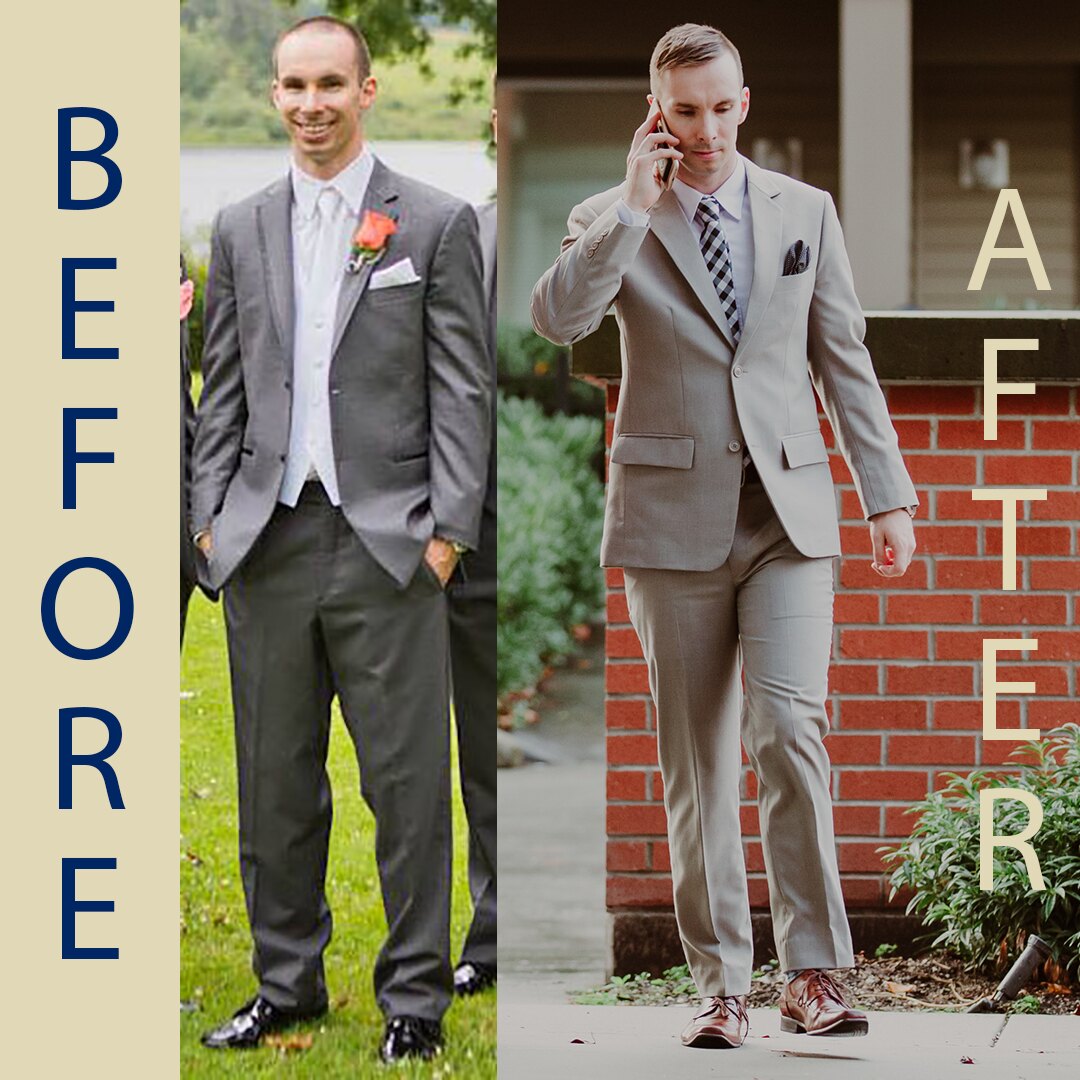
For most professional men who want clothes that fit correctly and look right for their life, made-to-measure is what they are looking for when they search for "bespoke." They want a garment built for their body. They want to choose the fabric and the details. They want it to look like it was made for them, because it was.
They do not need a toile fitting, a pattern they will own forever, or a three-to-six month production cycle. They need a suit that fits, in a fabric and colour that works for their life, at a price point that makes sense for where they are.
This is not a compromise. Made-to-measure produces excellent fit. The measurement process at Cardero captures 21 dimensions independently, which means the garment is built from a precise picture of your body, not a proportional average.
Why the Terminology Matters
The word "bespoke" appears on the homepage of nearly every custom suit studio in Canada, including many that offer made-to-measure. It is used as a shorthand for "high quality" or "personalized" rather than to describe the actual construction method.
Cardero does not describe itself as bespoke, because it is not bespoke. It is made-to-measure. Built to your 21 measurements, with your design choices, in a private appointment, with a permanent file. That is what it is, and that is what it delivers. If you want to understand what the made-to-measure options look like across BC, including all three studio locations in the Fraser Valley and Lower Mainland, that guide covers the full picture.
When you see "bespoke" on a studio's website, ask whether the studio drafts individual patterns from scratch for each client, runs multiple toile fittings, and has a master tailor doing the pattern work. If the answer is no to any of those, what they offer is made-to-measure. That is not a lesser product. It is an honest description.
Which One Do You Need?
Bespoke is the right choice if you wear suits every day in a context where clothing is a significant part of how you are perceived professionally, you want a relationship with a tailor that produces garments over years, and you have the budget and timeline for the process.
Made-to-measure is the right choice if you want a suit that fits your body correctly, you want to choose every design detail, you need a production timeline measured in weeks rather than months, and you want to start at a price point under $1,000. For a complete look at what makes a quality suit, fabric, canvas construction, and finish, that guide helps you evaluate the actual product you are getting at any price point.
Most men asking about bespoke are looking for made-to-measure.
If that is you, the first appointment at Cardero is free. Book at carderoclothing.com/reserve.
Price your build before you book. Wool blend from $899, Super 120 from $1,299, Super 150 from $1,699. Shipping, the first appointment, and alterations are always included.
Price Your Build